
Hand Dryers vs Paper Towels for Commercial Washrooms
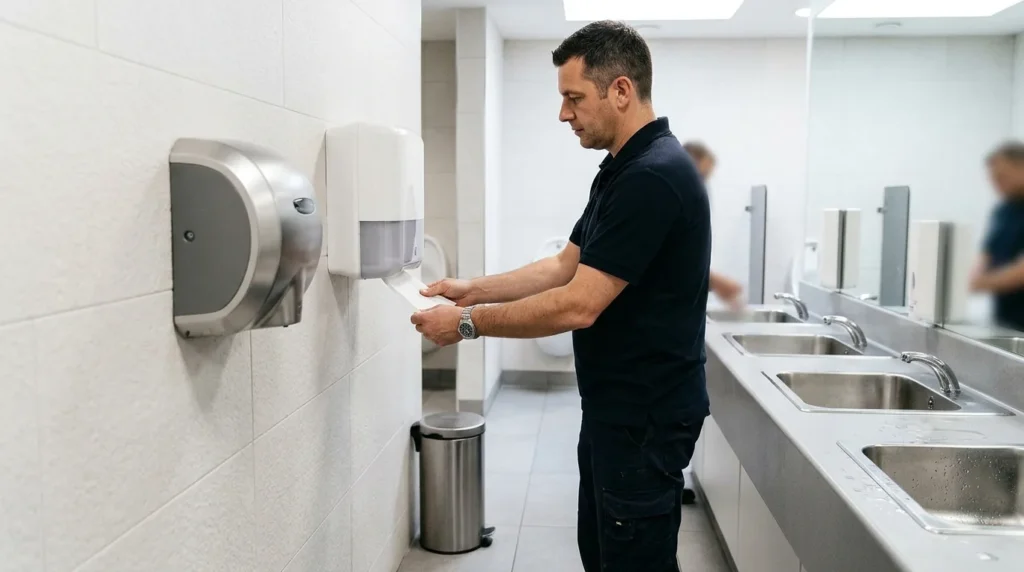
In the hand dryers vs paper towels debate for commercial washrooms, paper towels are the safer default wherever hygiene is critical, while hand dryers can make sense in high-footfall, low-risk washrooms. The right choice comes down to who uses the room and what they do next. Hygiene-critical settings include food production, commercial kitchens and healthcare-adjacent sites. In low-risk washrooms, cutting waste and restocking may matter more.
Below we compare the two on hygiene, compliance, running costs and practicality so facilities and site managers across East Anglia can choose with confidence.
Key facts at a glance
- UK law requires employers to provide a means of drying hands but does not specify which method. See the HSE Approved Code of Practice L24, which covers the Workplace (Health, Safety and Welfare) Regulations 1992.
- The Food Standards Agency’s Safer Food, Better Business packs tell food handlers to dry hands thoroughly on a disposable towel.
- Paper towels also give mechanical friction, which helps remove residue left after washing. Hand dryers do not.
- Hand dryers cost more to install. Paper costs more over time, in stock, storage and waste.
- Neither option makes up for poor handwashing. Drying is the last step, not the main one.
Hand dryers vs paper towels: hygiene in a commercial washroom
Wet hands transfer microorganisms far more readily than dry ones, so whichever method you choose has to dry hands fully and quickly. If users walk away with damp hands because the dryer was slow or the dispenser was empty, the method has failed.
Paper towels have two practical hygiene advantages:
- Friction. Rubbing with a towel physically removes moisture and some remaining contamination from the skin.
- Contained waste. The used towel goes into a bin rather than water being blown around the room.
A paper towel can also be used to turn off a tap or open a door on the way out.
The research on air dryers is mixed. Some studies, including work from the University of Leeds published in the Journal of Hospital Infection, found that jet air dryers dispersed more airborne contamination around a washroom than paper towels. Other studies, some of them funded by industry on both sides, reached different conclusions. Our honest reading is this: where cross-contamination has serious consequences, paper is the cautious choice. In a general office washroom, a well-maintained dryer is acceptable.
Food production and commercial kitchens
This is where the decision is clearest. FSA guidance for food handlers points to disposable towels, and most HACCP-based food safety management systems specify single-use paper at hand-wash stations in food areas. Your own HACCP plan and your environmental health officer’s expectations should be the final word.
A common question is which paper hand towels meet HACCP requirements. HACCP is a system for managing hazards, not a product certification, so no towel is “HACCP approved” on its own. What you need is a towel and dispenser that fit your documented controls. Typically that means single-sheet dispensing, enclosed dispensers and a reliable restocking routine. If your auditor asks for manufacturer documentation on a particular towel, tell us and we will obtain it from the brand rather than make claims ourselves.
Running costs: upfront vs ongoing
Hand dryers cost more upfront to buy and install. After that, the main running costs are electricity and maintenance. Paper towel dispensers are cheap to fit, but you keep paying for stock, storage space, delivery, waste collection and the staff time to refill.
Paper costs are easier to control than many buyers assume:
- Single-sheet or controlled-feed dispensers cut down on people pulling handfuls.
- Larger rolls and centrefeed systems need refilling less often, so they suit busy sites.
- Choosing the right ply and absorbency for the setting avoids overspending on premium paper where it is not needed, or wasting sheets because the towel is too thin.
For a direct comparison on your site, count your washroom visits and compare them against your current paper usage. We can help you work through those figures.
Environmental impact
Neither option is automatically greener. Hand dryers create no ongoing waste, but they use electricity on every use. Their real impact depends on the dryer’s power draw, how long it runs and your energy supply. Paper towels create waste and have a manufacturing footprint, but recycled-fibre products and managed waste streams reduce it. Lifecycle studies differ widely depending on their assumptions. Treat any single headline figure with caution, including manufacturers’ own figures.
Practical factors for trade sites
- Workshops and garages: oily, greasy hands are not a job for a hand dryer. Standard paper hand towels are made for drying washed hands. Heavier industrial wiping rolls are better for removing oil and grime at the workstation. Most workshops need both.
- High-footfall sites: dryers avoid empty dispensers, but slow models create queues and people leave with wet hands.
- Noise: high-speed dryers can be a problem in small or echoey washrooms and near offices.
- Mixed approach: many sites fit dryers in general washrooms and paper at food-area and clinical hand-wash stations.
Where we fit in
We supply trade paper and dispensing systems, including Lucart products, through our commercial paper hand towels range. Dispensers, soaps and washroom consumables are in our washroom and kitchen supplies range. We do not sell hand dryers. If a dryer is the right answer for your site, we will tell you.
Paper is only half of washroom hygiene. The cleaning and sanitising chemicals used in the room come with COSHH duties. We provide free COSHH assessments for many of the products we supply, along with bespoke on-site cleaning procedures.
Frequently asked questions
Are paper towels more hygienic than hand dryers?
Paper towels give friction and contain the waste, and FSA guidance favours them for food handlers. Research on air dryers is mixed. For hygiene-critical areas, paper is the cautious choice.
Is a hand dryer legally acceptable in a workplace washroom?
Yes. The Workplace Regulations require a suitable means of drying hands and accept either method. Food businesses should follow their HACCP plan and FSA guidance.
What is the difference between paper hand towels and industrial wipes?
Hand towels are designed to dry clean, washed hands. Industrial wiping rolls are stronger and made for wiping oil, grease and spills. Workshops usually need both.
Can we trial products before committing?
Yes. Samples are available on request, so you can test absorbency and dispenser fit on site.
Get a quote
We supply businesses across Wymondham, Norwich, Attleborough, Dereham, Thetford and the wider East Anglia region. Free delivery is available on qualifying orders, and we aim to despatch within two days. Call 01953 607093 (option 2) or contact us for a quote or to request samples.